Atif's Profile

Specializations:
Software Skills:
Computational Biology:
Anomalous Phenomena:
kingdom Animalia:
Vehicles:
Interdisciplinary Sciences:
Computational Biomechanics:
Biofluid Mechanics:
- Contributions
-
Contributions
28/Jun.2026. Atif Masood
Carotid bifurca...
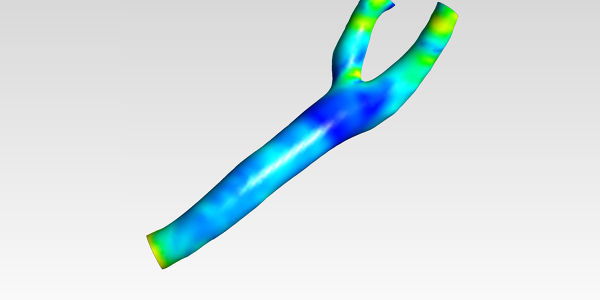
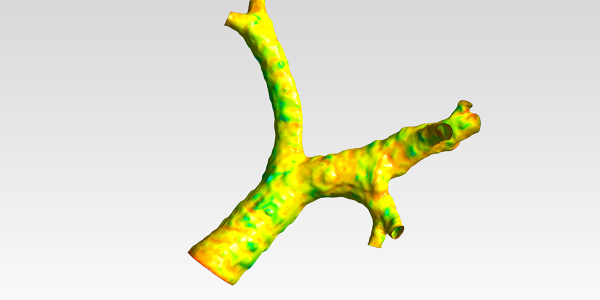
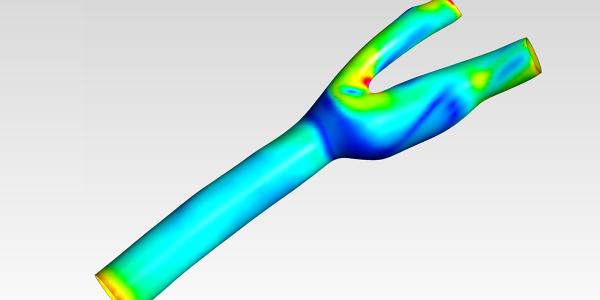
This CFD simulation investigates bl Blood is modeled as an incompressible non-Newtonian fluid using the Carreau–Yasuda viscosity model, allowing the blood viscosity to vary with local shear rate. The arterial wall is treated as a rigid no-slip boundary. A prescribed inlet velocity is applied at the common carotid artery, while flow exits through the ICA and ECA outlets according to the specified outlet boundary conditions. The steady-state simulation captures key flow features such as velocity acceleration near the bifurcation, pressure drop from the common carotid inlet to each outlet, and wall shear stress distribution along the vessel wall. Localized high-WSS regions may appear near the bifurcation apex, curved branch regions, or narrowed vessel sections where the flow experiences stronger near-wall velocity gradients. This case is useful for visualizing and analyzing carotid artery hemodynamics in an alternative bifurcation geometry, especially the influence of branch morphology on pressure, velocity, and wall shear stress patterns. CAD model used in this CFD analysis is by Aaron (https://grabcad.com/aaron-435) ...
14/Aug.2026. Atif Masood
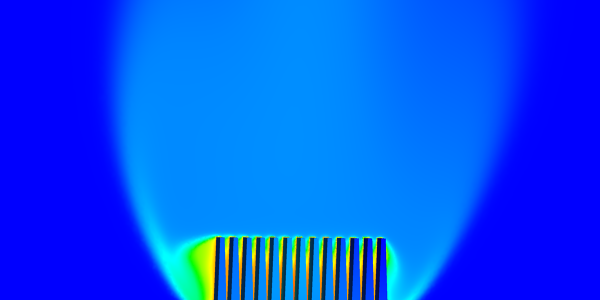
Plate Fin Heat ...
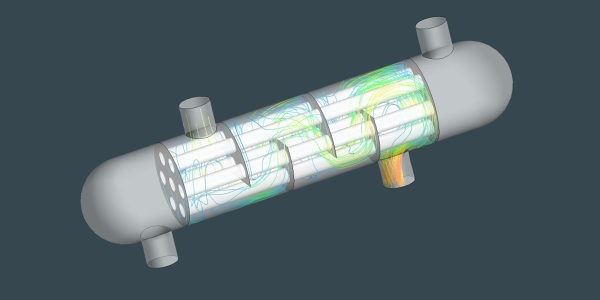
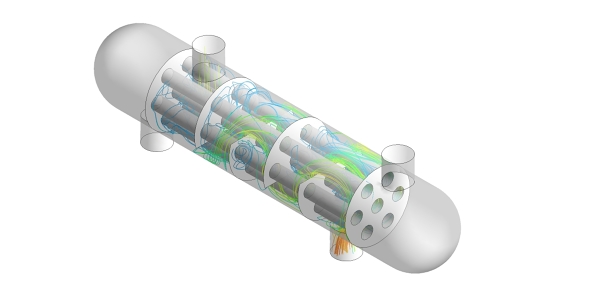
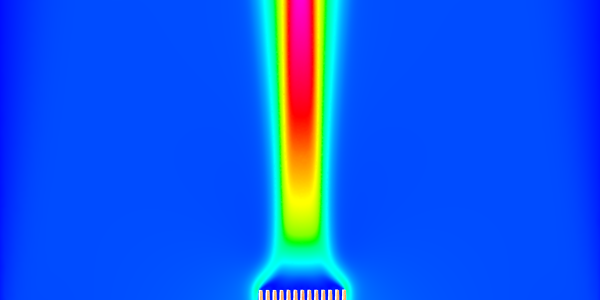
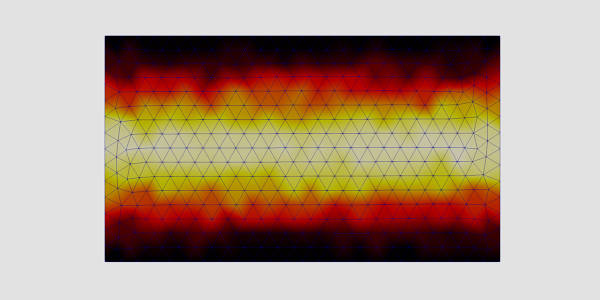
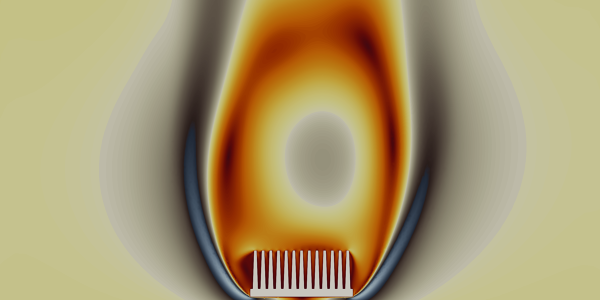
Initial forced convection simulatio To address this, the geometric clearance between the outer heat sink fins and the duct walls was significantly reduced, effectively blocking the preferential flow bypass channels. The velocity vector contours (see Fig. 6) confirm that this modification successfully redirected the airflow directly through the central fin gaps, with velocities reaching 1.5–2.3 m/s throughout the core of the heat sink. Thermal Impact: The modification yielded a drastic improvement in thermal performance. The peak heat source temperature dropped from 405 K to 355.5 K, a reduction of ~50°C. This validates that optimizing duct clearances is critical for maximizing the effectiveness of forced convection CHT systems, bringing the 10W component into a safe operating range (~82°C) without increasing fan power....
09/Feb.2026. Atif Masood
3D IBM Bow Shoc...
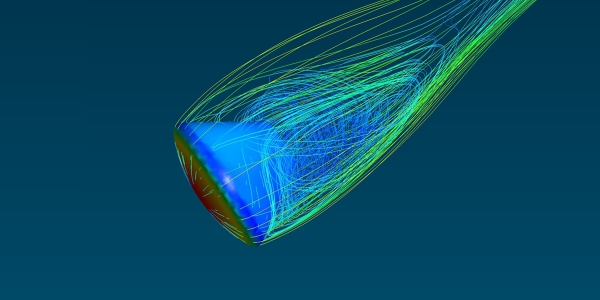
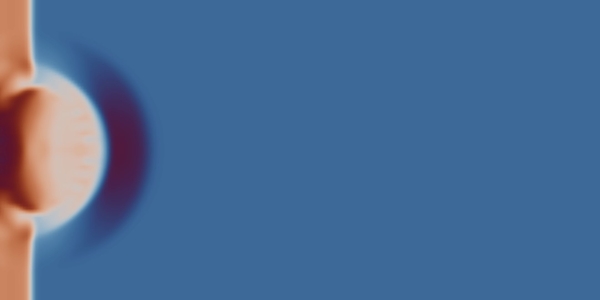
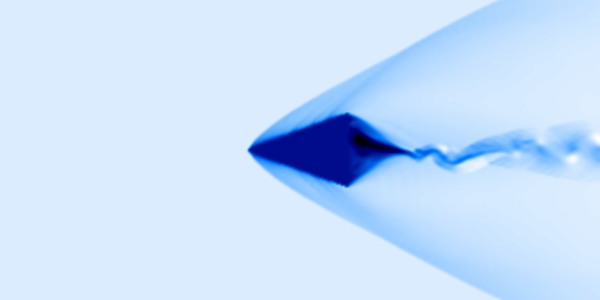
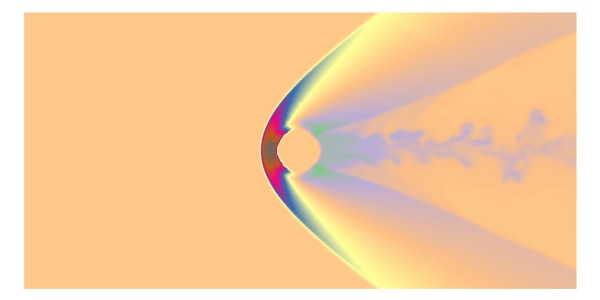
This simulation demonstrates a 3D s • Mach ≈ 2 freestream • 3D sphere (slip wall) • Grid: 384 × 192 × 192 • WENO5 + RK3 time integration • HLLC Riemann solver • Re ≈ 7.5 × 10⁶ The simulation captures a stable detached bow shock with correct curvature, symmetric structure, and a developing wake region downstream. This setup serves as a clean reference case for compressible IBM and shock-capturing validation. ...
29/Jan.2026. Atif Masood
Two-Fluid Bubbl...
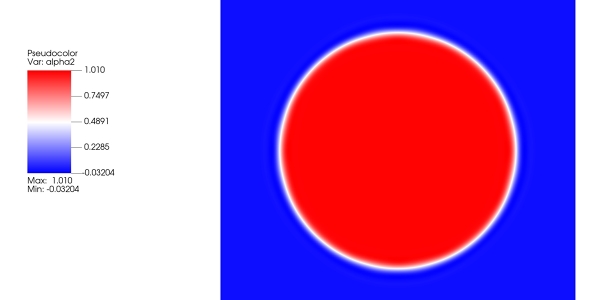
A two-fluid compressible CFD simula The pressure jump drives radial expansion of the bubble, generating symmetric pressure waves and velocity fields. The results demonstrate stable interface evolution, good symmetry preservation, and clean separation of the two fluids....
13/Jul.2026. Atif Masood
MOS Capacitor S...
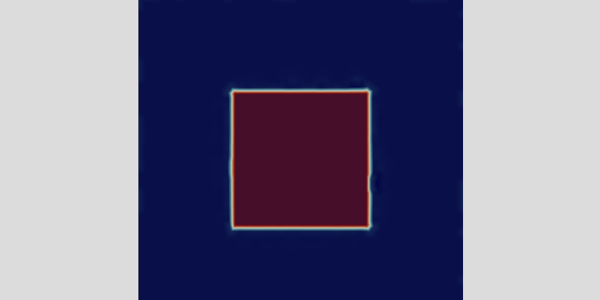
The model represents a metal gate o A practical benchmark for semiconductor device modeling, gate-stack analysis, parasitic extraction, and process-aware capacitance studies....
24/Jan.2026. Atif Masood
2D Gresho Vorte...
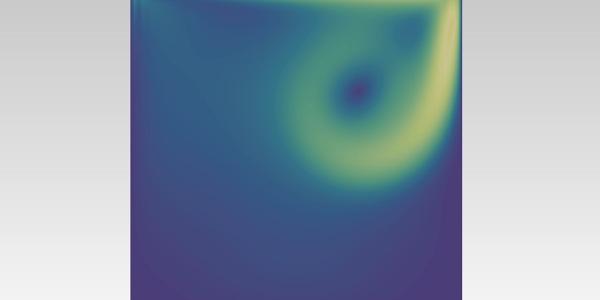
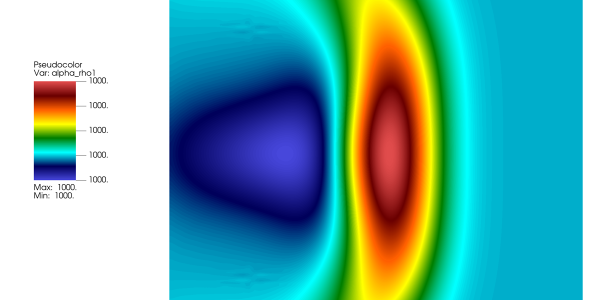
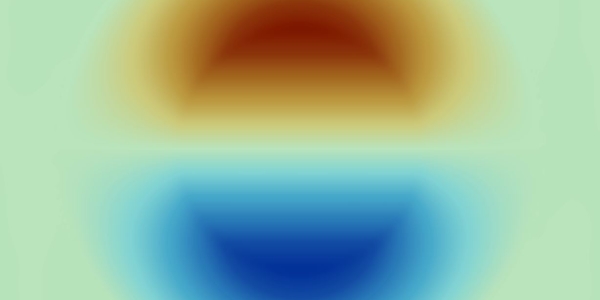
This simulation shows a 2D low-Mach The first image presents contours of 𝛼𝜌1, where small deviations from uniformity reveal compressibility and discretization effects concentrated near the vortex core. The second image shows pressure contours, highlighting the characteristic low-pressure center and surrounding high-pressure ring of the Gresho vortex. The preserved symmetry and sharpness indicate effective low-Mach correction and high-order WENO reconstruction for nearly incompressible flows....
28/Jun.2026. Atif Masood
Human Aortic Ar...
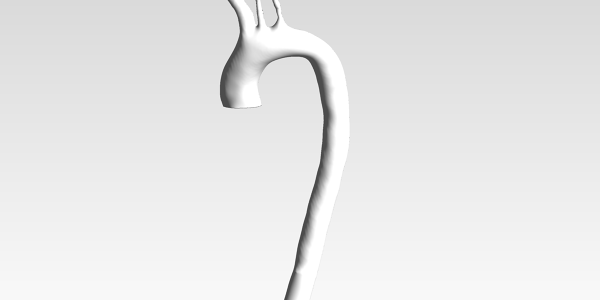
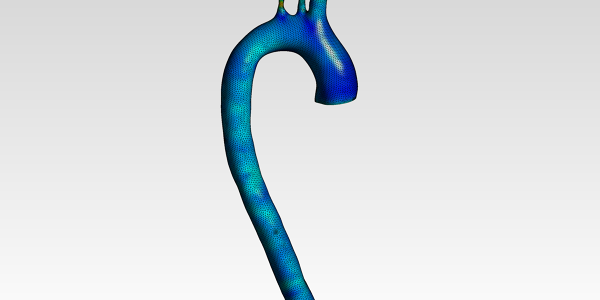
This CFD simulation investigates bl Blood is modeled as an incompressible Newtonian fluid, and the vessel wall is treated as a rigid no-slip boundary. A prescribed inlet velocity is applied at the ascending aorta, while flow exits through the descending aorta and the three arch branches according to the selected outlet conditions. The simulation captures key hemodynamic features such as flow acceleration through the curved arch, branch flow distribution, pressure drop from the inlet to each outlet, and wall shear stress patterns along the vessel wall. Localized high-WSS regions appear near branch takeoffs and narrowed/curved vessel sections, where the flow experiences stronger acceleration and near-wall velocity gradients. This type of simulation is useful for visualizing and analyzing aortic arch hemodynamics, including how vessel curvature and outlet branching influence pressure, velocity, and wall shear stress distribution. Original CAD model of the human aortic arch used in this CFD analysis is by Abdu Yearwood (https://grabcad.com/abdu.yearwood-1)...
13/Jul.2026. Atif Masood
Patient-Specifi...
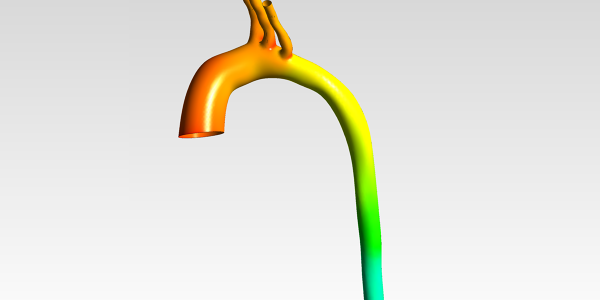
This CFD simulation investigates bl The outlet flow distribution was assigned using a geometry-adjusted split: 79% to the descending aorta, 7.5% to the right common carotid artery, 7.5% to the right subclavian artery, 3% to the left common carotid artery, and 3% to the left subclavian artery. This approach divides the previous brachiocephalic contribution between its two daughter branches while limiting flow through the smaller left-side branches. The simulation results show the pressure distribution, velocity streamlines, and wall shear stress over the aortic arch. Flow accelerates through the curved arch and into the branch vessels, with most of the flow continuing into the descending aorta. Localized wall shear stress elevations occur near branch takeoffs and curved/narrowed vessel regions, where stronger near-wall velocity gradients are expected. This case demonstrates CFD-based analysis of patient-specific aortic hemodynamics in a congenital heart disease anatomy. CAD model of human aortic arch used in this cfd simulation is from https://www.vascularmodel.com/dataset.html#0...
24/Jan.2026. Atif Masood
3D Lagrangian b...
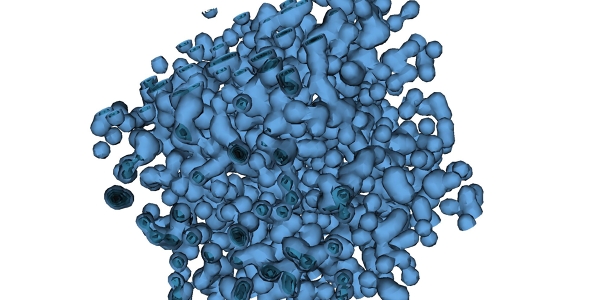
This simulation shows a 3D acoustic The image visualizes the instantaneous void fraction field (gas volume fraction) as a 3D iso-surface/contour rendering, revealing how the initially distributed bubble population organizes into a complex, highly nonuniform “screen” as the wave passes. Regions of elevated void fraction indicate bubble clustering and local amplification of compressibility, while lower-void regions correspond to bubble depletion and shadowing. The fragmented, corrugated structure highlights strong spatial variability in bubble response and the resulting scattering/attenuation of the acoustic field key mechanisms behind bubble-screen formation and acoustic shielding in bubbly liquids....
10/Jul.2026. Atif Masood
Interdigitated ...
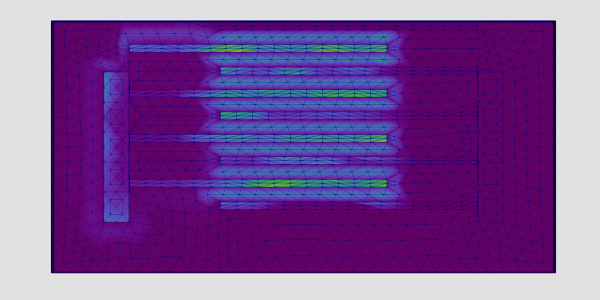
The workflow starts from a 2D elect A practical example for semiconductor sensor design, MEMS devices, and on-wafer parasitic capacitance analysis....
22/Aug.2026. Atif Masood
8-Qubit Superco...
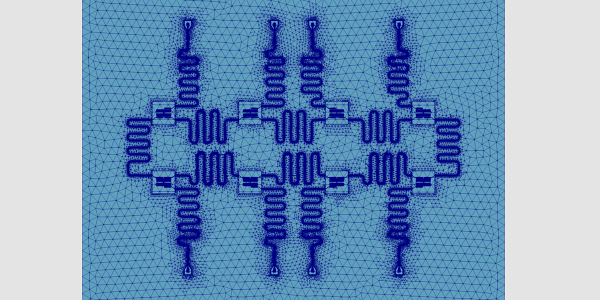
This project presents a finite-elem The model uses an adaptive tetrahedral/triangular finite-element mesh with strong local refinement around the qubit structures, coupling regions, and lumped Josephson-junction ports. The substrate is modeled with a relative permittivity of 11.9, while the surrounding region is treated as vacuum. An eigenmode analysis was performed to identify the electromagnetic and qubit-like modes of the full chip. A total of 20 eigenmodes were solved, with the eight dominant qubit modes appearing between approximately 4.81 and 5.51 GHz. The extracted qubit frequencies are: • Q1: 4.808 GHz • Q2: 4.892 GHz • Q3: 4.976 GHz • Q4: 5.075 GHz • Q5: 5.172 GHz • Q6: 5.281 GHz • Q7: 5.392 GHz • Q8: 5.512 GHz The Josephson junctions were represented using lumped inductive-capacitive elements. Their inductances range from 14.5 nH to 11.0 nH, with a junction capacitance of 2 fF for each qubit. Energy Participation Ratio (EPR) data from Palace were used to identify the qubit-like modes and estimate the nonlinear properties of the circuit. The calculated qubit anharmonicities are approximately −221 to −248 MHz, consistent with transmon-type superconducting qubits. The EPR analysis was also used to construct an 8×8 cross-Kerr / ZZ interaction matrix, revealing the dominant nonlinear interactions between the qubits. The strongest calculated cross-Kerr couplings include: • Q7–Q8: 1.94 MHz • Q6–Q7: 1.91 MHz • Q5–Q6: 1.42 MHz • Q2–Q3: 1.37 MHz • Q3–Q4: 0.99 MHz • Q1–Q5: 0.70 MHz The results demonstrate how full-wave finite-element eigenmode simulations can be combined with Energy Participation Ratio quantization to characterize multi-qubit superconducting circuits, including mode frequencies, junction participation, anharmonicity, and qubit–qubit nonlinear coupling....
24/Jan.2026. Atif Masood
Taylor–Green Vo...
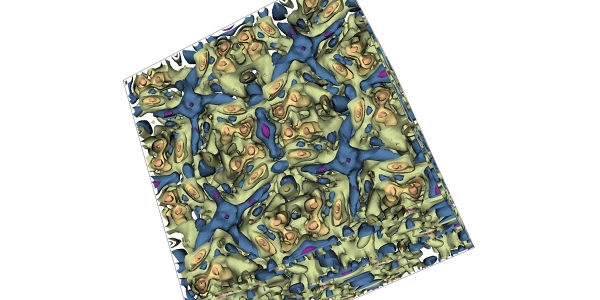
This simulation shows a 3D Taylor–G The first image visualizes the Q-criterion in 3D, highlighting coherent vortical structures through an isosurface rendering. The clustered, interconnected “worm-like” features indicate regions where rotation dominates over strain, capturing the emergence of small-scale vortices and the developing turbulent cascade. The second image shows a planar velocity magnitude contour (|𝘂|), revealing the characteristic symmetric pattern of high-speed regions and shear layers that intensify as the flow transitions. The third image presents the normalized velocity magnitude field, which emphasizes relative variations across the domain and makes the multi-scale organization of energetic structures more apparent, even where absolute speeds are smaller. Together, these views demonstrate the solver’s ability to resolve vortex stretching, breakdown, and the resulting complex turbulent topology in the TGV benchmark....
04/Jul.2026. Atif Masood
2D Compressible...
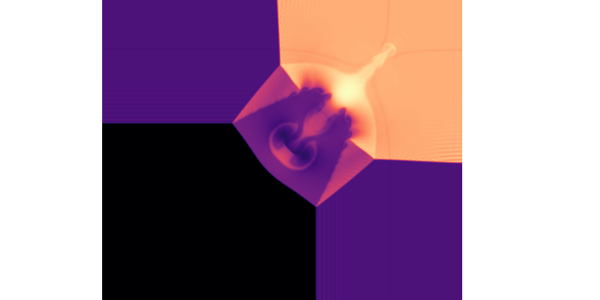
This case presents a two-dimensiona The simulation is performed on a uniform 499 × 499 grid using a high-order WENO reconstruction scheme and an approximate Riemann solver. As the solution evolves, the initially simple patch configuration develops into a rich multidimensional wave pattern. The high-pressure and high-density region drives strong compression waves into the surrounding lower-pressure states, while velocity differences across the interfaces generate curved contact surfaces and vortex-like roll-up features. The visualized fields include pressure, density, and x-velocity. The density field clearly captures the contact and shear structures, while the pressure field highlights the shock and compression regions. The velocity plot shows the development of localized acceleration and flow reversal near the central interaction zone. This benchmark is useful for evaluating shock-capturing performance, numerical dissipation, interface resolution, and the robustness of high-order compressible-flow solvers in multidimensional discontinuous flows....
31/May.2026. Atif Masood
Qubit–Coupler E...
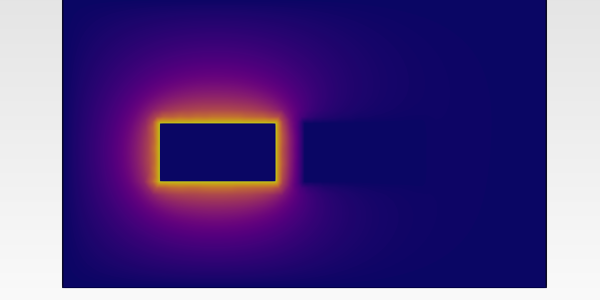
This case presents an electrostatic The simulation solves the electrostatic field problem on a 3D finite-element mesh and postprocesses the results in ParaView. The uploaded visualizations show the scalar electric potential, electric field magnitude, electric energy density, and surface charge distribution on clipped cross-sections through the device region. The electric potential is strongly localized around the driven conductor and decays smoothly into the surrounding simulation domain. The electric field and energy density are concentrated near the pad edges and in the coupling gap, which is expected for superconducting capacitive structures. The surface charge distribution also shows edge enhancement, especially on the conductor boundaries facing the neighboring pad. These features are consistent with the physical behavior of qubit–coupler layouts, where capacitance and coupling strength are dominated by near-field interactions in narrow gaps and around metal edges. The case can be useful for researchers and engineers studying superconducting quantum circuits, microwave resonator layouts, capacitive coupling, and electromagnetic field localization in planar chip geometries....
01/Jun.2026. Atif Masood
Superconducting...
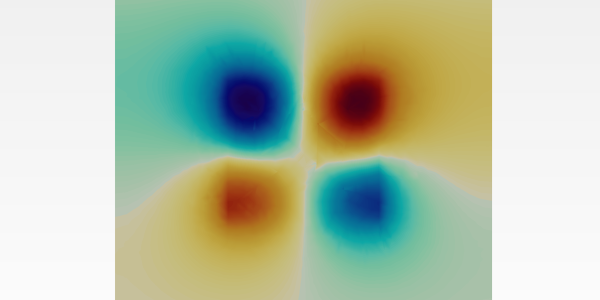
This case presents an eigenmode sim The simulation solves for resonant electromagnetic modes of the device geometry and postprocesses the results in ParaView. The uploaded visualizations show the real and imaginary components of the electric and magnetic fields, along with electric energy density, magnetic energy density, and a power-flow-related field quantity. The electric-field distribution is concentrated around the capacitive pad regions, while the magnetic-field and magnetic-energy distributions are localized around the resonator body/current path. This separation between electric and magnetic energy is physically consistent with a microwave resonator mode, where voltage-like behavior is strongest near capacitive regions and current-like behavior is strongest near inductive regions. For eigenmode results, the absolute phase of the complex field solution is arbitrary. Therefore, the real and imaginary field components should be interpreted as mode-shape components rather than standalone physical snapshots. The field magnitudes and energy-density plots are generally more useful for validating the resonator behavior....
12/Jun.2026. Atif Masood
6-Qubit Superco...
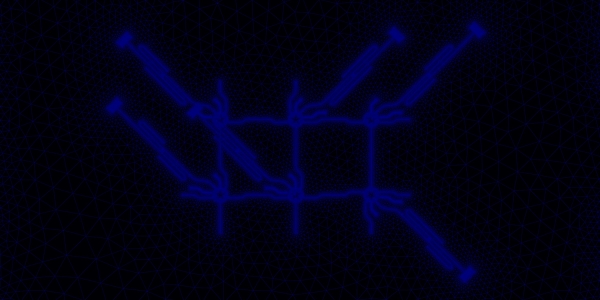
This project demonstrates the elect The chip is designed as a compact 2 × 3 transmon grid with nearest-neighbor connectivity. The layout includes superconducting metal structures, qubit islands, coupler regions, readout-related features, lumped Josephson-junction elements, vacuum and substrate domains, and an exterior absorbing boundary. The final model also includes a PEC metal boundary, making the setup suitable for a physically meaningful first-stage eigenmode analysis. The simulation was performed using NumericalAI's Computational Electromagnetic (CEM) solver. The generated mesh resolves the important quantum circuit features, including the transmon and coupling regions, while maintaining a coarser mesh away from the active device area. The resulting electric energy density field shows strong localization around the qubit/coupler structures and launcher regions, consistent with expected superconducting circuit behavior. ...
- Education
- Publications
- Work Experience
- Connect